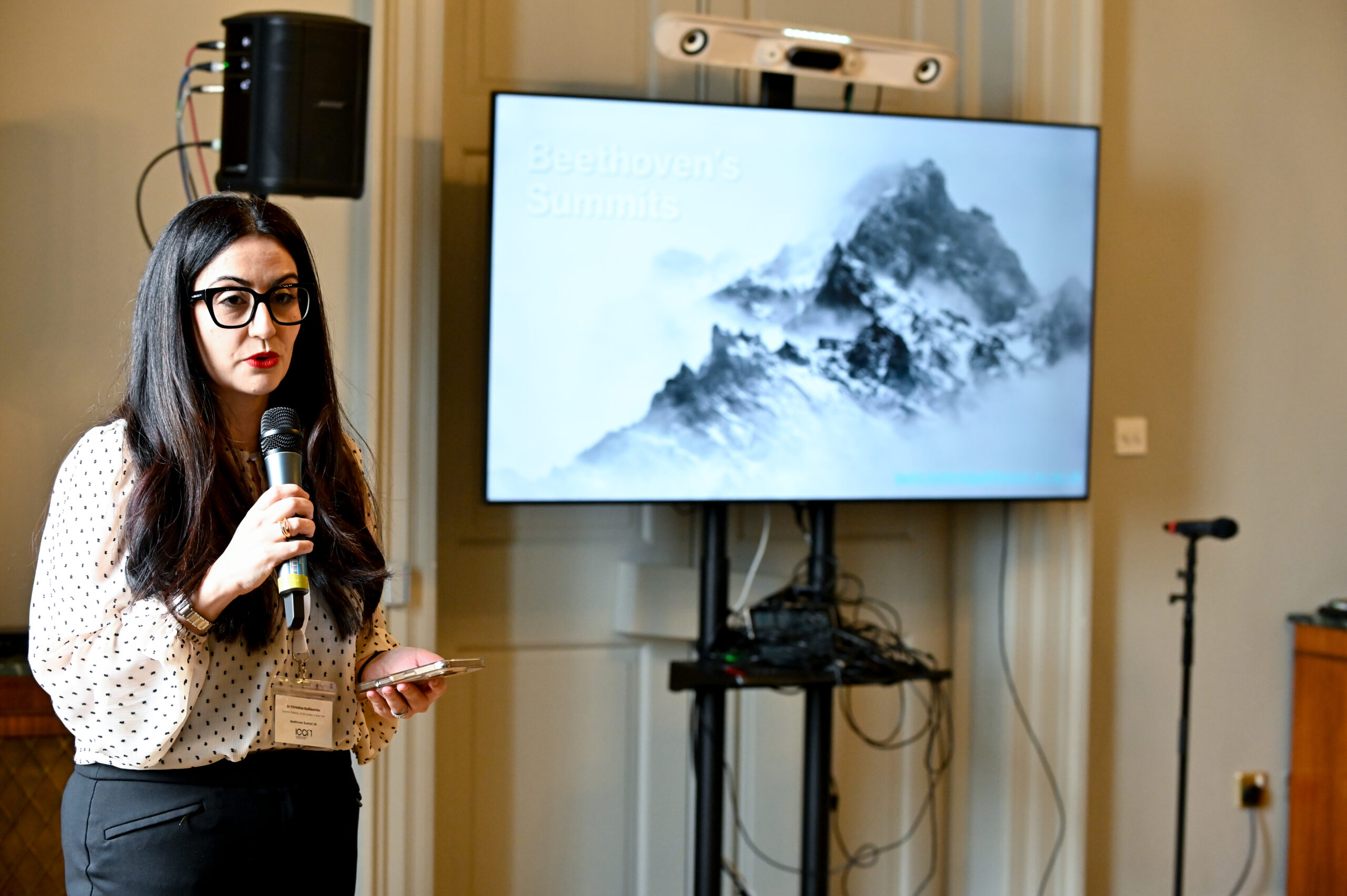
Bringing research into conversation with performers, audiences and the wider cultural world is an important part of my work. Alongside academic research and teaching, I work as a broadcaster, speaker, curator and advocate for music education, creating opportunities for specialist research to reach audiences beyond the academy. Some examples of recent events I curated and directed are shared here.
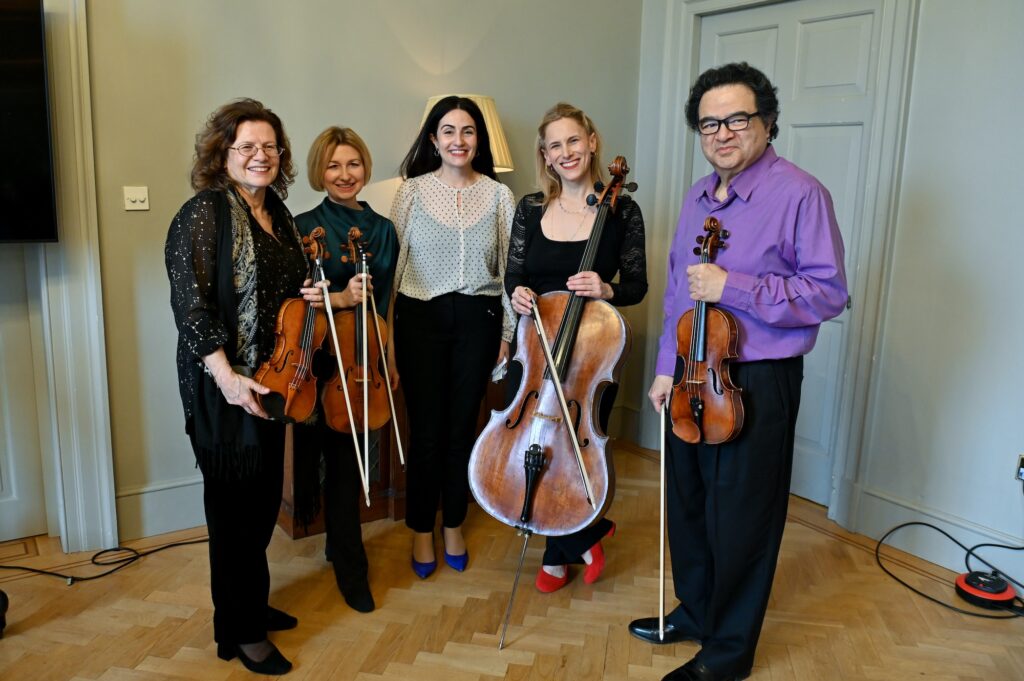
With the wonderful Quartet Isolde, Beethoven Summit, London 2026
Much of my work begins with the archive, but it does not end there. I am interested in how music, history and ideas can be brought to life through performance, conversation and public events. From international symposia and curated festivals to broadcasting, public lectures and working directly with musicians, I want to create opportunities in which scholarship can be encountered as something living: something to be heard, questioned, discussed and experienced.
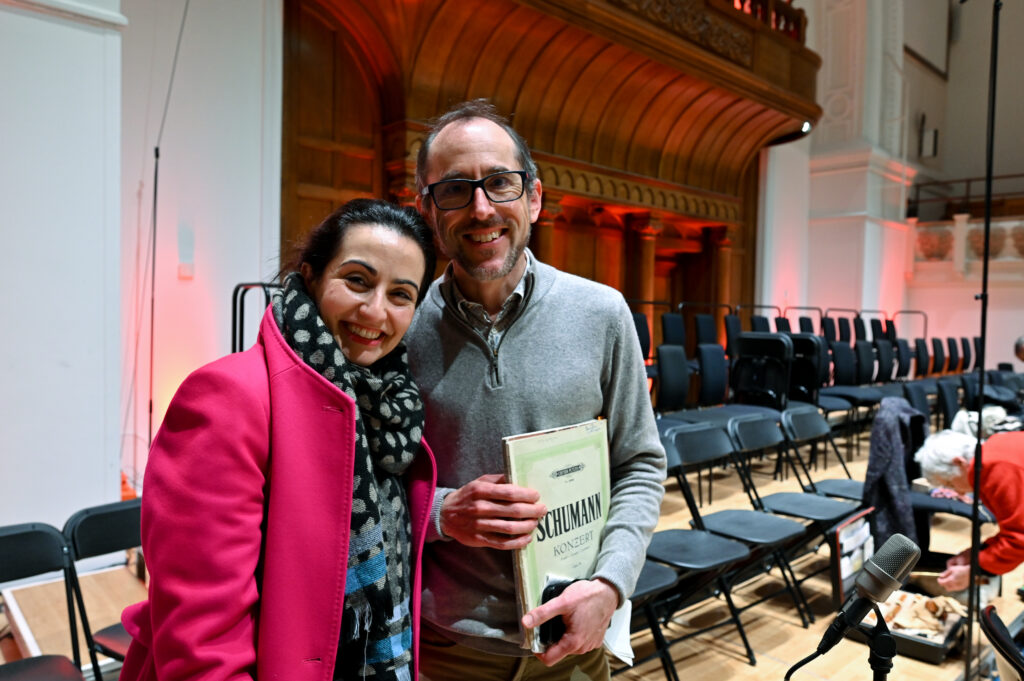
With pianist Danny Driver, Cadogan Hall.
Beethoven Summit, London, March 2026
In March 2026, I directed the ICCM, Beethoven Summit, a four-day international gathering devoted to Beethoven and the musical world of early nineteenth-century Vienna. Bringing together leading Beethoven scholars, performers and audiences, the Summit explored historical, musicological and performance-practice questions through a programme in which scholarship and live music were closely intertwined.
Rather than separating the academic conference from the concert platform, the Summit was conceived as a space for exchange between researchers, performers and the public. Scholarly papers and panel discussions sat alongside performances on historical instruments, while interactive forums invited audiences to question speakers, discuss ideas and participate directly in conversations about Beethoven, his music and its historical context.
At the heart of the project was a simple idea: that our understanding of music can be transformed when historical evidence, scholarly interpretation and the experience of performance are allowed to speak to one another.
Prokofiev in Paris, June 2026
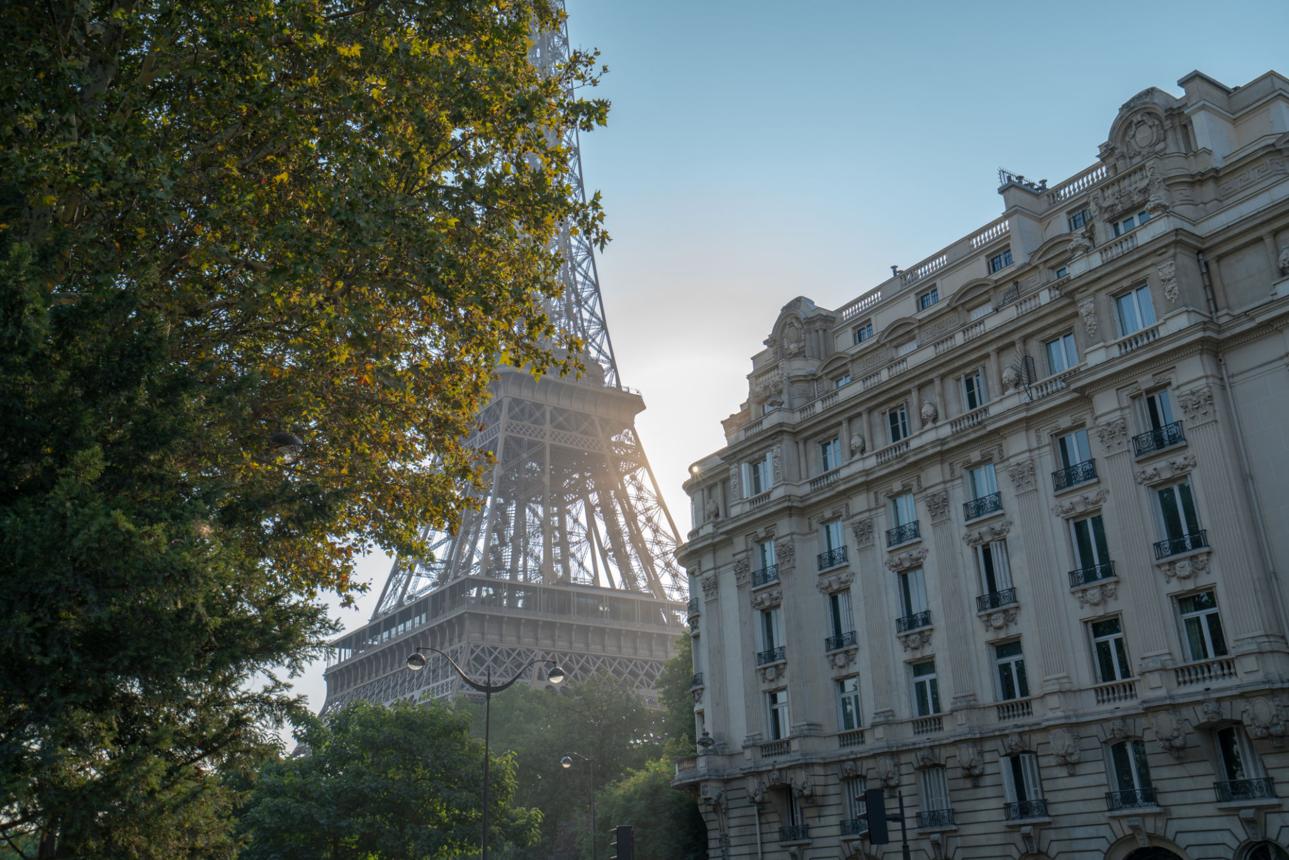
In June 2026, I organised the international symposium Prokofiev in Paris: Exploring Early 20th Century Cultural Networks through Digital Archives, held at Columbia University’s Paris Global Center at Reid Hall. The event brought together an international community of leading Prokofiev scholars, performers, archivists and digital-humanities researchers to reconsider the composer’s years in France and his place within the wider artistic and intellectual networks of European modernism.
The two-day programme deliberately moved beyond the format of a conventional academic conference. Research panels explored Prokofiev’s music, performance, ballet, early works and professional networks, while archival research was placed in dialogue with emerging digital approaches to music history. A dedicated digital-humanities workshop, “Prokofiev’s Letters as Data,” explored what correspondence can reveal when it is approached not only as documentary evidence but as a means of reconstructing relationships, movements and cultural networks.
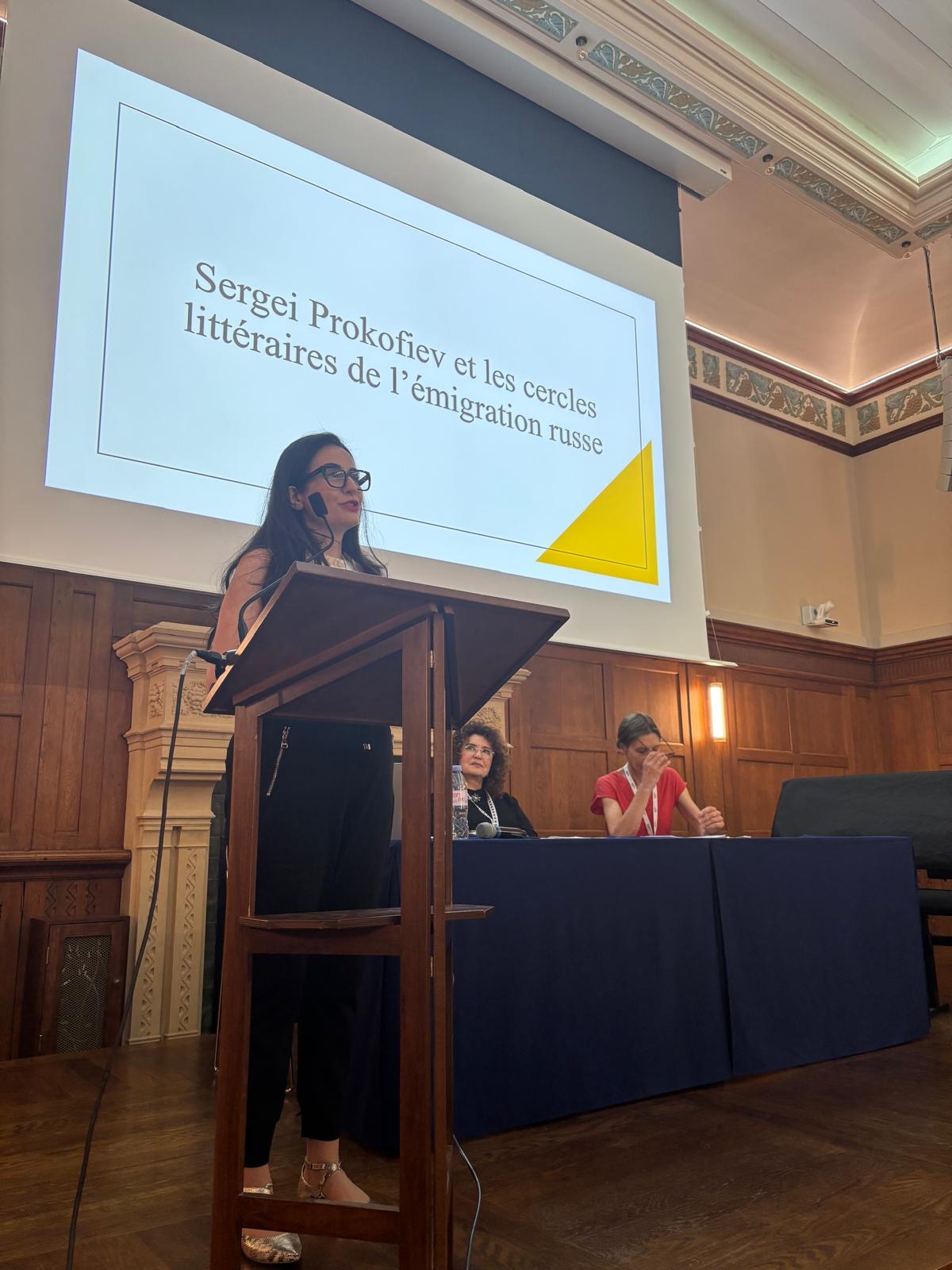
Performance was integral to the symposium. Two concerts placed the music at the centre of the discussions taking place around it, bringing scholarship, musical sources and the experience of hearing Prokofiev’s work into direct conversation. The symposium culminated in a plenary discussion, “Prokofiev Studies in the 21st Century,” bringing together scholars and practitioners to consider new directions for research on the composer.
The symposium was also about asking a larger question: how might we tell the history of twentieth-century music differently? Prokofiev’s Paris was not simply a backdrop to the creation of individual works, but a dense cultural environment shaped by composers, performers, dancers, impresarios, institutions, friendships and international exchange.
This interest in people, places and networks increasingly connects my Prokofiev scholarship with my wider research on musical modernism. It also informs my current work on interwar London, where I am similarly interested in recovering the often less visible relationships and forms of cultural labour through which modern musical life was made.